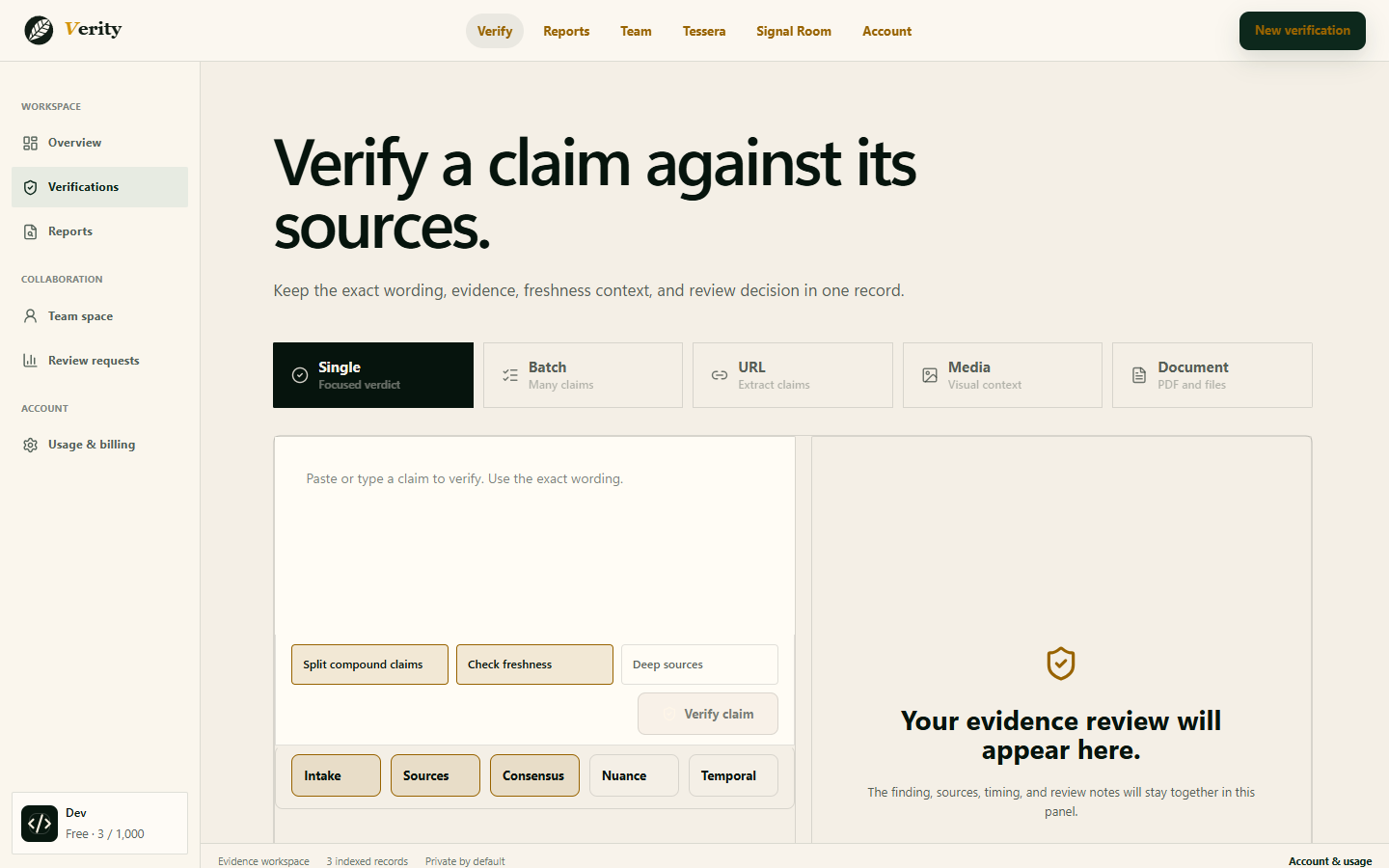
Check the exact claim
Start with a statement, URL, or document. Review the verdict alongside the source material and any unresolved questions.
Open verificationCheck claims. Read the evidence. Keep a record of what informed your decision.
Open verificationStart with a statement, URL, or document. Review the verdict alongside the source material and any unresolved questions.
Open verification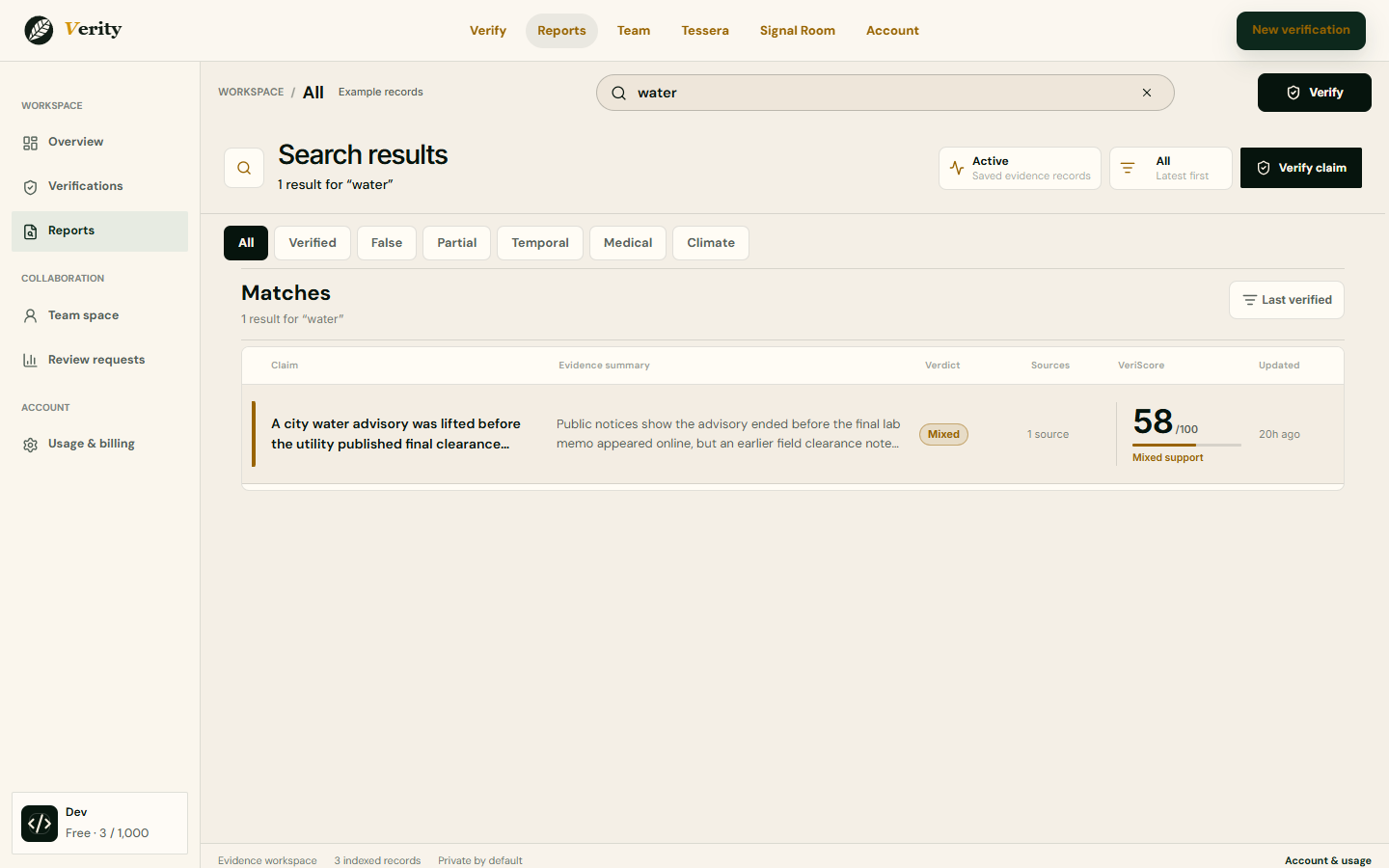
Search saved reviews, revisit the wording, and reopen the record when a decision needs a second look.
Open workspace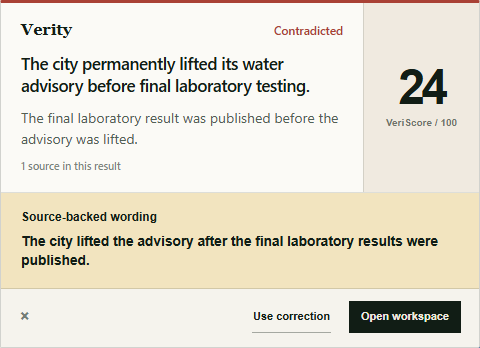
Select text, inspect source-linked results, and review suggested corrections before applying them to an editable draft.
Explore the extensionMeet Atticus, Socratic, Vitals, Sterling, Cipher, and Mirage. Find the right starting point for legal, academic, medical, financial, vulnerability, and media evidence.
Choose a field to see the questions and boundaries that matter. Available sources and checks depend on the review.
Does the source support this headline—or a narrower claim?
Compare exact wording, dates, and attribution. Keep unresolved context visible to the person making the publication decision.
A review supports an editorial decision. It does not approve publication.
Start a reviewNames are useful only when they explain the work. Inspect the actual response to see which checks ran.
A numeric review signal. Read it with the verdict, source material, and returned score details—not as a probability of truth.
Checks claim wording and scope, including qualifications that may affect a review.
Adds temporal context to evidence review. Inspect the returned freshness and date information.
Examines extracted claims and citations. Unsupported formats or unavailable diagnostics must remain visible.
Indexes completed verifications for search, related records, and review of changing evidence.
Combines executed evidence and component signals within the verification pipeline. It is not a guarantee of accuracy.